Every year, billions in assets go unclaimed because families did not know what existed or where to find it. SafeHerit is your secure digital vault that automatically transfers information about your assets to your beneficiaries, but only if something happens to you.
In the United States alone, there is over $60 billion in unclaimed assets. Forgotten retirement accounts. Dormant bank balances. Life insurance policies never collected. Not because families did not care, but because they did not know.
The average person today has over 100 online accounts. Brokerage apps. Crypto exchanges. Digital banks. Subscription services with stored value. None of this shows up in a filing cabinet. None of it is part of a traditional will.
When someone dies unexpectedly, their family is left to piece it together. They call banks that will not speak to them. They search email accounts they cannot access. They hire lawyers and wait months, sometimes years, hoping nothing slips through the cracks.
Some families recover everything. Many do not. A 2023 study found that 1 in 4 Americans has lost track of at least one financial account. Now, do you know what happens to those accounts when the only person who knew about them is gone?
After a dormancy period of just three to five years, institutions are legally required to surrender these ‘abandoned’ assets to the state. Your wealth is liquidated and absorbed into the public treasury, effectively bypassing the family you intended to protect.
It does not have to be this way.
SafeHerit: A Private Vault for the Information Your Family Will Need
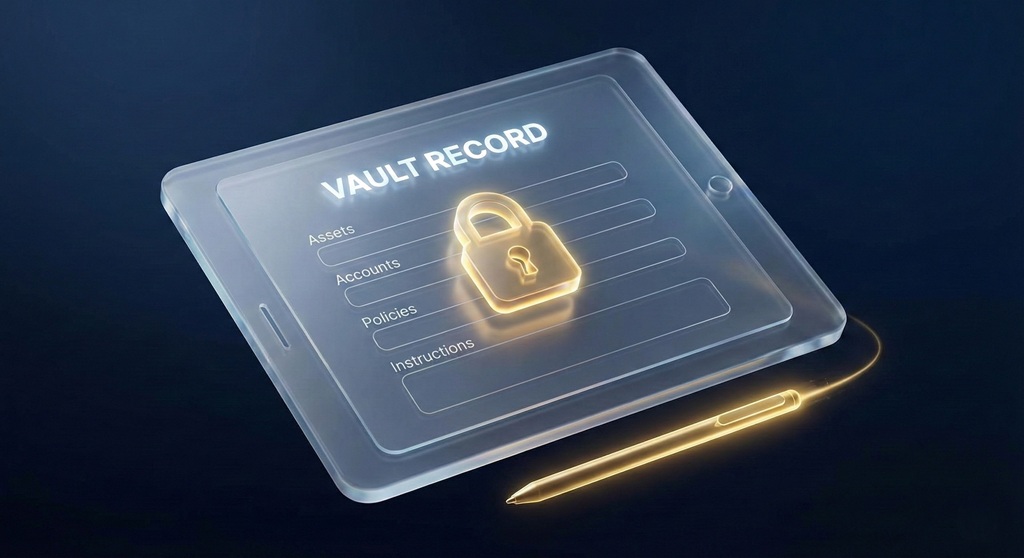
SafeHerit is a secure digital vault where you record information about your assets, accounts, policies, and instructions. Not the assets themselves. Just the information your family would need to find and access them.
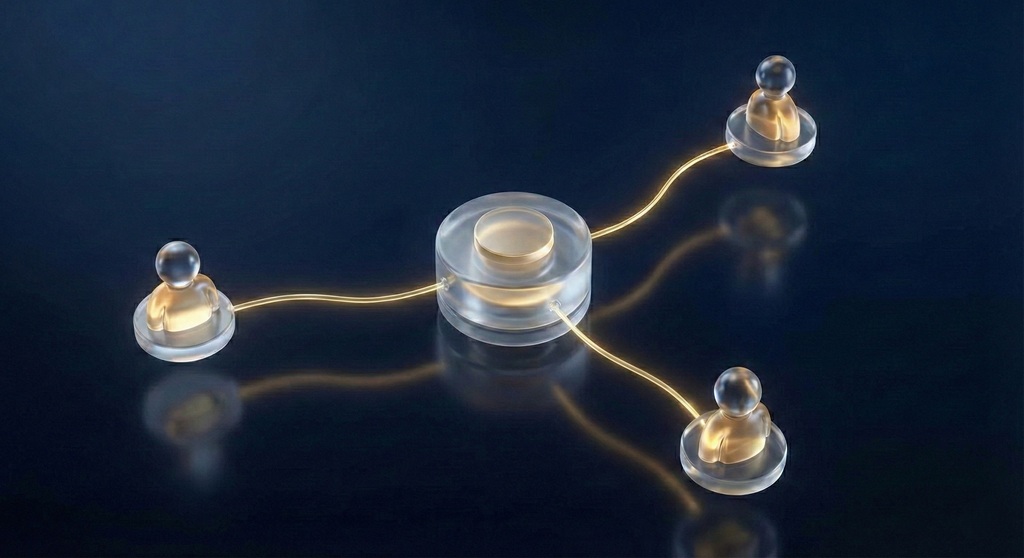
You decide who receives what. A spouse. A child. A trusted friend. Each beneficiary only sees what you have assigned to them, and only when specific conditions are met.
Until then, your vault stays sealed. Encrypted. Private. Not even SafeHerit can see what is inside.
Three Steps. Five Minutes. Complete Peace of Mind.
1
Record What Matters
Add your accounts, properties, policies, and instructions. Include access details, locations, contacts, and anything else your family would need. Everything is encrypted on your device before it leaves.
2
Assign Your Beneficiaries
Choose who should receive each piece of information. Your spouse might see everything. Your children might see only specific accounts. You control exactly who sees what.
3
Let SafeHerit Guard It
Our Pulse Check system periodically confirms you are okay. If something happens, your chosen validators verify the situation. Only then do your beneficiaries receive their designated access. Until that moment, no one sees anything.
But I Do Not Want Anyone Seeing My Financial Information."
Neither do we. That is why SafeHerit was built on zero-knowledge architecture.
Your data is encrypted on your device before it ever reaches our servers. What we store is unreadable ciphertext. We do not have the keys used to encrypt your data, they stay with you.
Without your keys, we cannot decrypt your data. We cannot read it, sell it, or hand it over to anyone. Not to hackers. Not to governments. Not to creditors. Not even to a court order. We simply do not have access.
This is not a policy. It is how the system is built. Your privacy is protected by mathematics, not promises.
Encrypted on Your Device
By the time it reaches us, it is already unreadable.
From entrepreneurs with global portfolios to crypto enthusiasts seeking absolute privacy, SafeHerit makes estate planning effortless. Here is how we helped them.
A close friend of mine passed away suddenly last year. He was 43. His wife spent months trying to piece together their finances. She didn’t even know about one of their bank accounts. That shook me. I looked into SafeHerit, set it up over a weekend, and now my partner has a clear path to everything if the worst happens.
Greg H., Architect
When my mum had her stroke we spent weeks just trying to figure out which bank her pension was even with. Nobody knew anything. We found some statements in a drawer eventually but it was a nightmare. I signed up for SafeHerit that same month. My kids are not going through that.
Priya N., Pharmacist
“I spent weeks researching before I trusted SafeHerit. Then I actually tested it. Your data really does get encrypted before it leaves your machine. They can’t see it even if they wanted to. That’s not marketing, that’s how the thing is actually built. I wouldn’t have trusted anything less than that.”
Alex K., Security Engineer
“I run a business but don’t have a co-founder. It’s just me. If I’m out of the picture, my wife would need to either wind down the business or find someone to run it, and either way she’d need access to everything. Client list, hosting, payment processor, the works. I couldn’t find a good way to hand that off until SafeHerit. Now it’s all documented and she’s the beneficiary for the business side.”
Omar E., Small Business Owner
“I’ve got a pension in the UK, property in Portugal, and retirement savings in the US. My wife is Portuguese, her English is ok but financial English? No chance. If something happened to me she’d be dealing with three countries and paperwork in languages she’s not comfortable with. SafeHerit was the only thing I found that actually helps handle that kind of mess.”
Daniel A., IT Consultant
“After our son was born, my husband asked me ‘if something happens to you, where’s everything?’ And I just… didn’t have an answer. I found SafeHerit and sat down one Sunday afternoon and got it all in. Every account, every policy. Took maybe two hours. Should’ve done it years ago honestly.”
Sarah M., Marketing Director
“I was sick for about a week last year and my business partner couldn’t even log into our payment processor. He kept texting me for credentials. And I just thought, what if I couldn’t answer those texts? Put everything into SafeHerit that weekend. Business stuff goes to him, personal stuff goes to my wife. Done.”
Marcus J., Agency Founder
“I had a minor surgery last year, nothing serious, but the night before I couldn’t sleep because I kept thinking about all the stuff only I know. Passwords, account numbers, where the life insurance paperwork is. My husband wouldn’t have a clue. Set up SafeHerit the week I got home. Probably should’nt have taken a health scare to get me to do it but here we are.”
Jenny F., Accountant
“My brother’s not technical at all. If I died tomorrow he’d be staring at a Ledger he doesn’t know how to turn on, trying to figure out which wallets have what and which seed phrases go where. I used SafeHerit to write out every step he’d need, and he won’t see any of it unless something actually happens to me. That’s what sold me.”
Yuki S., Independent Trader
“Second marriage, two kids from my first, one from his. It gets complicated fast. I needed a way to make sure specific things go to specific people without everyone seeing the full picture. SafeHerit let me do exactly that. My lawyer handles the legal will, this handles the ‘here’s how to actually find and access everything’ part.”
Natalie B., HR Director
“I travel a lot for work. Southeast Asia, Middle East, sometimes for weeks at a time. There’s always this thing in the back of my head like, what if something happens while I’m in the middle of nowhere? My business doesn’t stop just because I’m unreachable. I put everything on SafeHerit so my partner and my COO each know exactly what they’d need. It’s one of those things where you feel lighter once it’s done.”
Sam T., Import/Export
“We moved from the US to Dubai three years ago and still have accounts back home, plus new ones here and some in the UK. My wife wouldn’t know where to start if something happened to me. It’s not even just about the money, it’s about the information. Where things are, who to contact, what reference numbers to use. That’s what SafeHerit stores.”
Jay P., Management Consultant
“Updating a will through our lawyer costs about $500 every time. And we’d need to update it every time we open a new account or change a beneficiary. SafeHerit costs a fraction of that per year and I can update it whenever I want. It doesn’t replace the will, but it handles the part the will was never good at anyway.”
Brian L., Small Business Owner
“I run a consultancy with my partner. If something happened to either of us, the other one would need access to client files, vendor contacts, payment systems. Our personal families would need completely different things. I really liked how Safeherit lets you separate personal from business and assign different people to each.”
Diane K., Managing Partner
“My dad had a stroke two years ago and was in a coma for 2 months before passing. We eventually figured it out, but for a while we had no idea what he had or where and it was a lot of stress nobody needed. I set up SafeHerit for myself the next week. I promised myself I’m not putting my family through the same thing.”
Mark S., Logistics Manager
“I wasn’t sure how the beneficiary thing would work but it’s pretty straightforward. You add the person, assign them to specific assets, and they get their own key. They can’t see anything until the trigger conditions are met. I assigned my husband to everything personal and my business partner to the business accounts. It was done much faster than I thought.”
Vanessa L., Interior Designer
“I work in infosec. I’ve seen how companies handle ‘encrypted’ data. Most of them hold the keys, which means it’s not really your encryption, it’s theirs. SafeHerit doesn’t hold the keys. Your data is encrypted on your device before it’s ever transmitted. That’s a fundamentally different architecture and it’s the right one.”
Stefan W., Information Security Manager
“I’m not very techy and I was worried it would be confusing. It really wasn’t. Every step has a clear explanation. Add an asset, pick the type, fill in the details, choose who gets it. I added twelve assets with details and attachments in about forty minutes.”
Brenda Y., Retired Teacher
“The Pulse Check thing was a bit weird at first, like why is this app asking me if I’m alive? But once you understand the logic it makes total sense. It checks in periodically, and if you don’t respond it escalates to your validators. Only after that whole process does anything get disclosed. It’s actually really well thought out.”
Phil T., Mechanical Engineer
“I’m not a technical person and I don’t understand encryption at a deep level. But I understand that SafeHerit can’t see my data, and that even if they were hacked my information would still be protected. The fact that it’s built into the system and not just a policy someone could change is what matters to me.”
Laura B., Real Estate Agent
“I’ve audited enterprise encryption implementations for years. Most companies do it wrong: keys stored alongside data, server-side decryption, key escrow with the vendor. SafeHerit does it right. Client-side encryption, user-held keys, zero knowledge on the server. It’s textbook correct and honestly that’s rare.”
Owen J., Security Auditor
“I’m Canadian but I’ve lived in Singapore for six years. I have accounts in Canada, Singapore, and a rental property in Portugal. Three tax jurisdictions. If my partner had to deal with this after I’m gone, she’d be completely overwhelmed. SafeHerit at least gives her a roadmap.
Nathan C., Portfolio Manager
“I kept telling myself I’d put everything in a spreadsheet. Said that for about three years. SafeHerit finally got me to actually do it because it was simple enough that I ran out of excuses. Now it’s all in there, and I love that I can easily update it anytime.”
Rachel T., Operations Manager
“I’m on Ethereum, Solana, and a few L2s. Different wallets for different things, different seed phrases, some in metal, some on paper. If my sister had to figure this out on her own it’d be impossible. SafeHerit lets me lay out exactly what’s where and how to recover it, and she can’t see any of it until it’s actually needed.”
Nico M., DeFi Researcher
“A buddy of mine died in a car accident at 41. His wife didn’t know about half their accounts. She found out about a life insurance policy eight months later by accident. I signed up for safeherit the same week when I realized that could’ve been my family. “
Chris H., Construction Manager
“My aunt passed away last year and it took the family over a year to figure out her finances. She had accounts nobody knew about. Money that just sat there. I swore I wouldn’t put my kids through that. SafeHerit gives me a way to make sure they’ll know about everything without me having to hand over the details while I’m still alive.”
Michelle R., Project Manager
“In our business we use something like twenty different tools at this point. Stripe, AWS, Cloudflare, our CRM… Every password was either in my head or buried in a Slack message from two years ago. I knew it was a problem, just didn’t know what to do about it. SafeHerit gave me a place to actually organize all of it and decide who gets what if something happens to me.”
Kevin O., CTO, E-Commerce
“I’d been meaning to organize all this stuff for years. Bank accounts, insurance, the deed to the house, retirement accounts, all of it was either in my head or in a drawer somewhere. SafeHerit made me actually sit down and do it. It took an afternoon to find all the details I wanted to include, but the actual input was very easy.”
H
. Tanaka, Consultant
“I was expecting it to be a whole weekend project, but the whole setup took me maybe an hour and a half. I liked how it walks you through the asset types. Bank accounts, brokerage, real estate, crypto, insurance… you just pick the type and fill in the details. I didn’t have to figure out how to structure anything. It was already organized for you. “
Derek N., Sales Director
“The key architecture is sound. Keys are generated client-side. The private key is encrypted with a derivative of your password and stored locally, never sent to the server. Public keys are stored server-side for encrypting data encryption keys. It’s a proper envelope encryption scheme. I’d have designed it the same way.”
Rohan P., Cloud Security Architect
“I’m a privacy-first person. I don’t use cloud storage for anything sensitive. I don’t trust companies with my data as a rule. SafeHerit is the one exception because they’ve built it so they literally can’t read my data. If a court ordered them to hand it over, all they could provide is useless encrypted data. That’s the standard I need.”
Mikhail S., Privacy Consultant
“My insurance broker asked me if I had a continuity plan. I said ‘sort of’ which really meant no. That conversation bugged me enough to actually do something about it. Found SafeHerit, mapped out all the information my business depends on, assigned my ops manager as beneficiary for the business accounts and my sister for the rest.”
Helen W., Restaurant Owner
“The disclosure logic is what sold me. It’s not just ‘if you don’t hear from me release everything.’ There’s a whole verification process. The Pulse Check, then the validators confirm, and only then does the beneficiary get access. You can configure how aggressive or cautious you want it to be. That level of control matters when it’s about your wealth.
George A., Risk Analyst
“I used to keep sensitive documents in a cloud drive. Then I realized that Google, Microsoft, whoever… they all hold the keys to decrypt my files. They can read them if they want to. SafeHerit can’t. It’s a completely different model and once you understand the difference, you can’t ignore it.”
Jason F., Systems Administrator
“The thing that convinced me is the breach scenario. Even if SafeHerit’s servers get compromised, all an attacker would get is encrypted data they can’t decrypt. The keys aren’t there. That’s the whole point of zero-knowledge architecture and it’s why I’m comfortable storing sensitive information here.”
Hassan M., Network Engineer
Five Minutes Now. A Lifetime of Clarity for Them.
You cannot choose when something will happen to you. But you can choose whether your family is prepared. Take the first step today: ensure your loved ones will never have to search for what you left behind or wonder how to access it.